Acrylic candle
Idea
Recently I’ve become fascinated with rocket engines. Naturally, liquid rocket engines are very hard to build and get running at home, and solid ones are treated by law as bombs. This leaves hybrid ones. As the name suggests, hybrid rocket engines are made of two propellants, where one is liquid or gaseous and the other is a solid. It’s also way safer, as the propellants are mixed only in the combustion chamber, so accidental ignitions are close to impossible. I hope it’s perfectly understandable that keeping a solid rocket motor under your bed is bad, even if the law wouldn’t ban it.
The simplest way to witness the combustion process inside a hybrid rocket engine is running an acrylic gaseous oxygen engine. It will not produce any sensible thrust, but it’s fun to play with. Summarizing, to construct this hybrid engine demonstration, we need:
- a thick acrylic rod with about 100mm of diameter,
- pressurized oxygen,
- some high-pressure equipment like necessary valves and reducers.
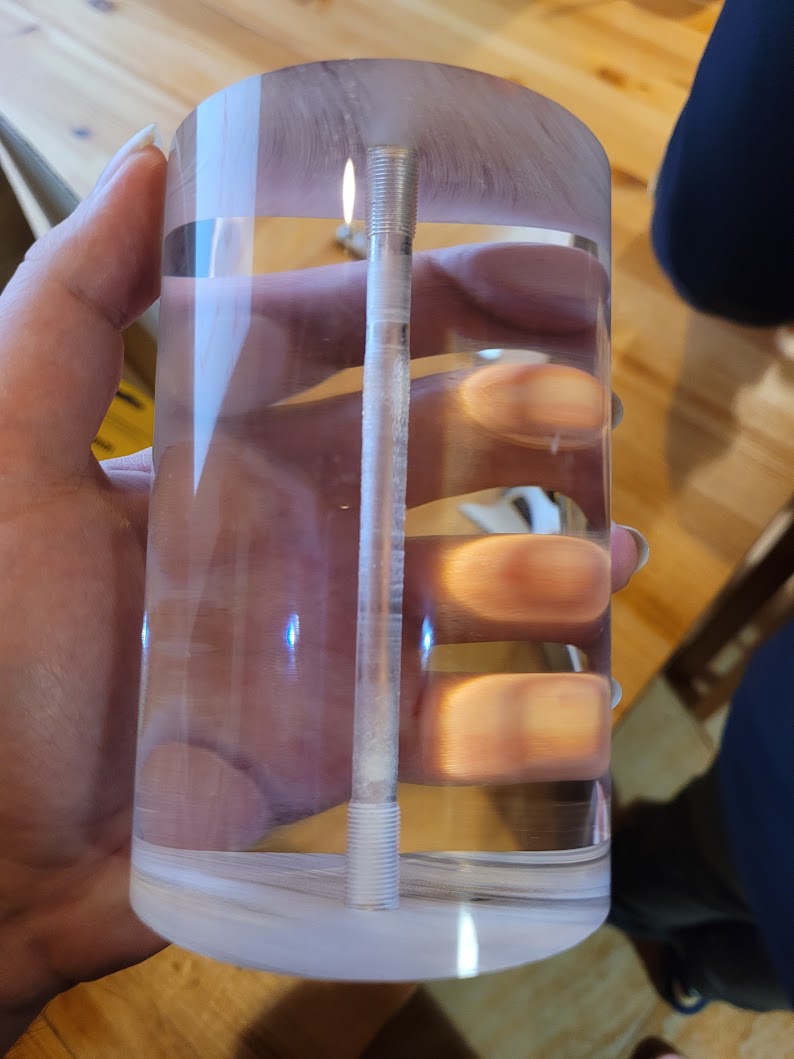
The acrylic rod can be seen below. It has been drilled through its center line to form the initial combustion chamber wall. On the side, the hole was also threaded to allow for mounting a copper pipe providing the oxygen. To make this connection gas-tight, epoxy resin was used to provide an unscrewable and resilient connection.
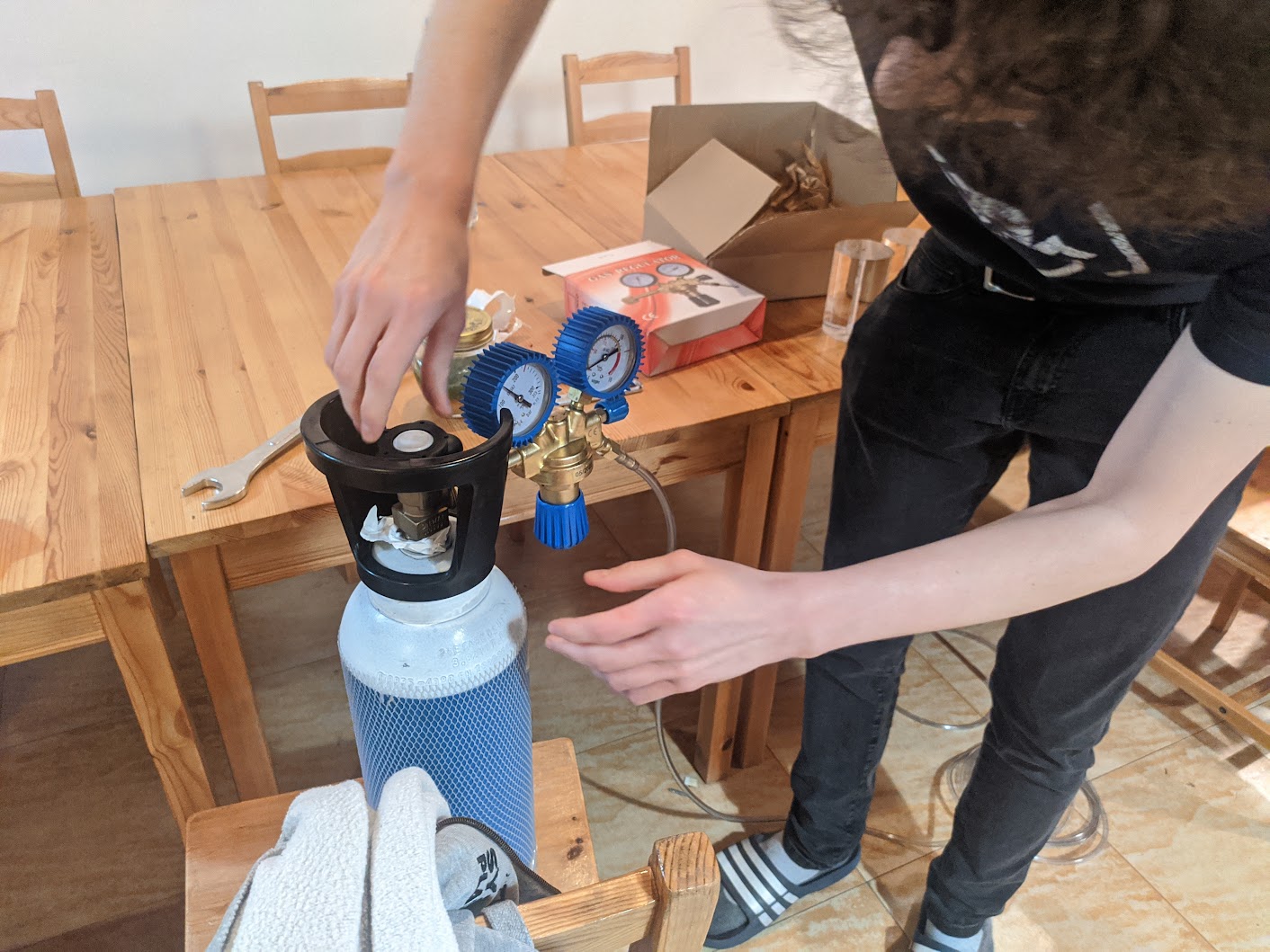
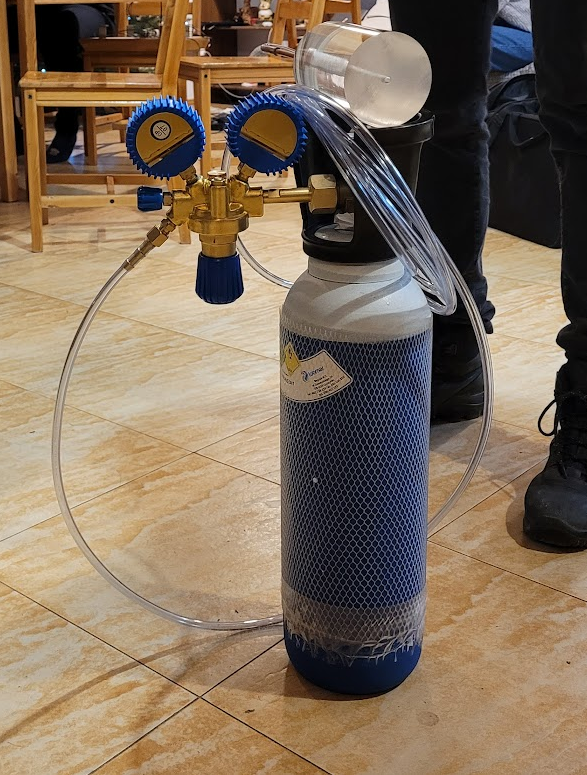
The whole setup can be seen on the two following pictures. I used a 150-bar oxygen pressure vessel with a control valve that reduced the gas pressure to a maximum of 10 bar. This is then fed into the hose, which connects directly into the copper pipe leading into the acrylic rod.
Running the engine
It was really loud and bright but also extremely fun to run. Ignition happened by opening the oxygen valve a little and lighting up the exit hole of the rod. It began to burn as if it had been a candle. Then, as the temperature inside increased, the flame started to enter the inside of the combustion chamber. When it reached the other side with the copper pipe, the oxygen valve was opened fully, unleashing the fury.
Inspecting the rod after burn
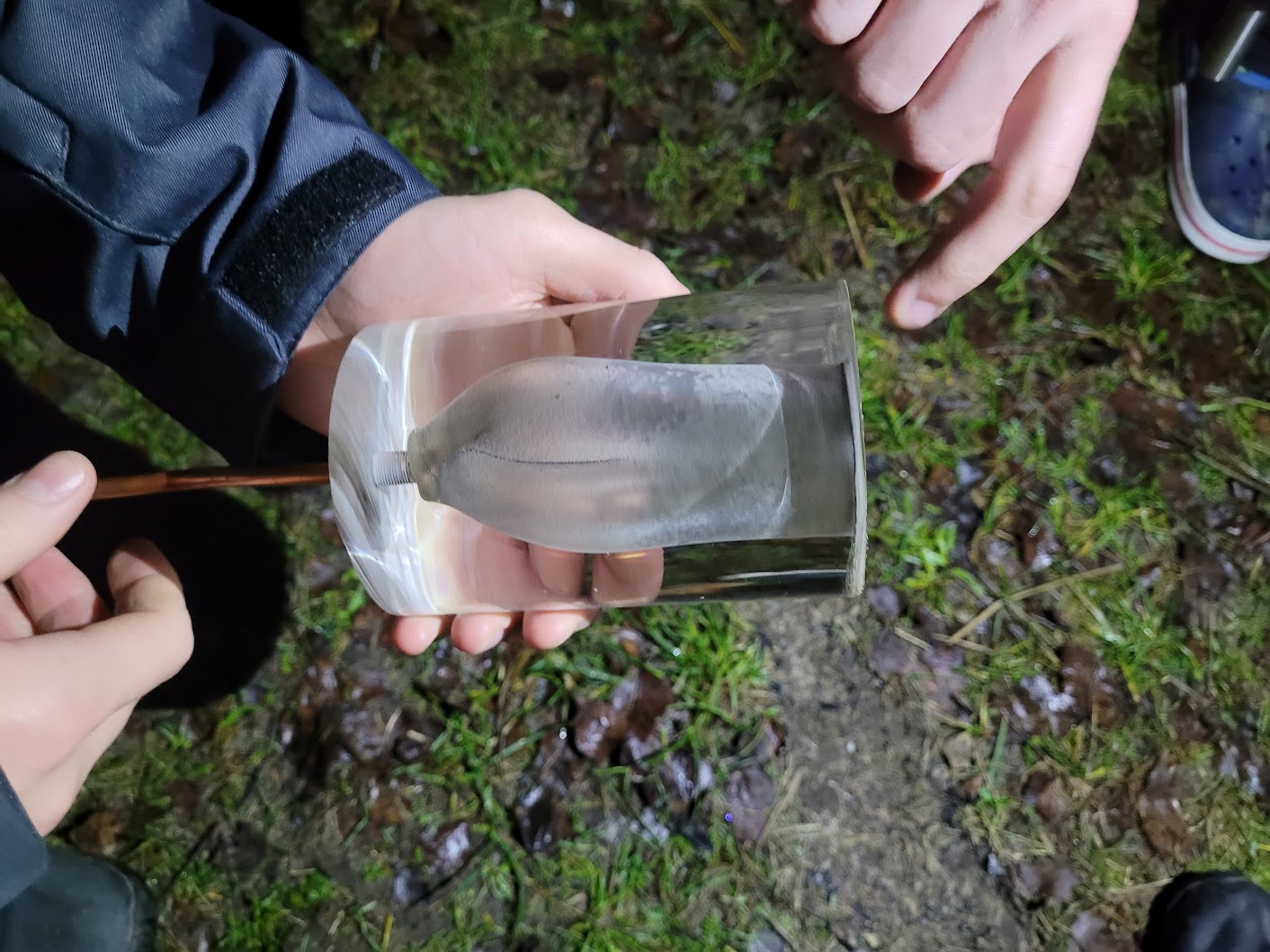
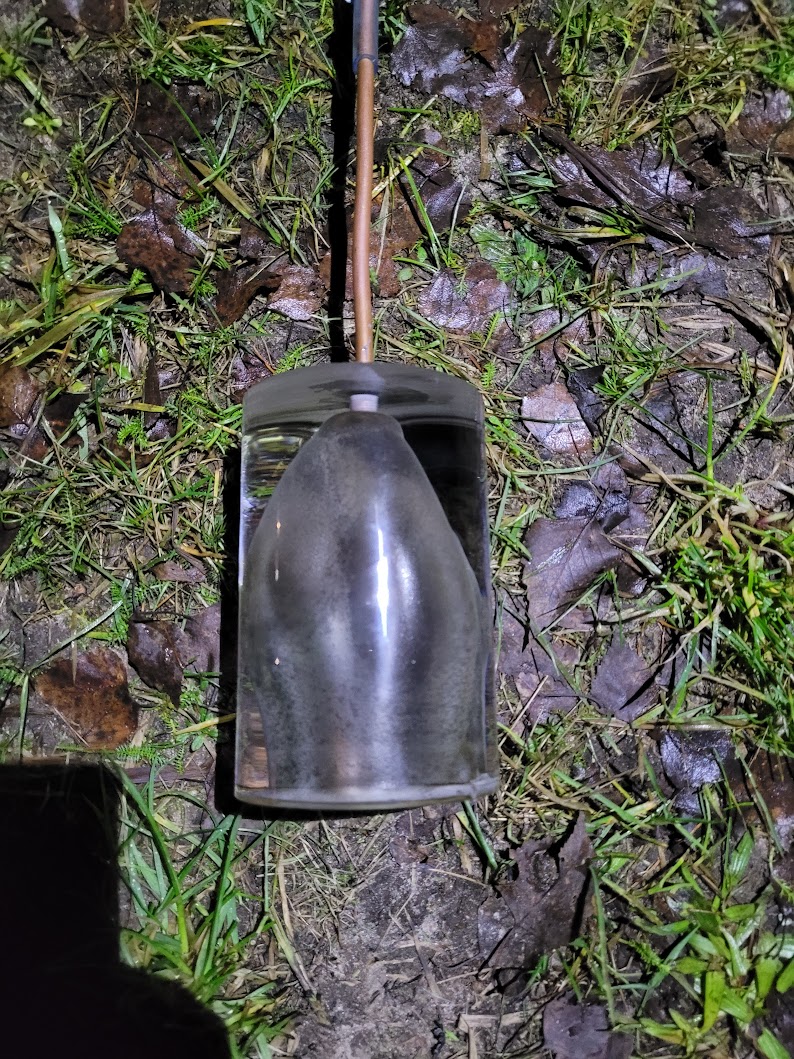
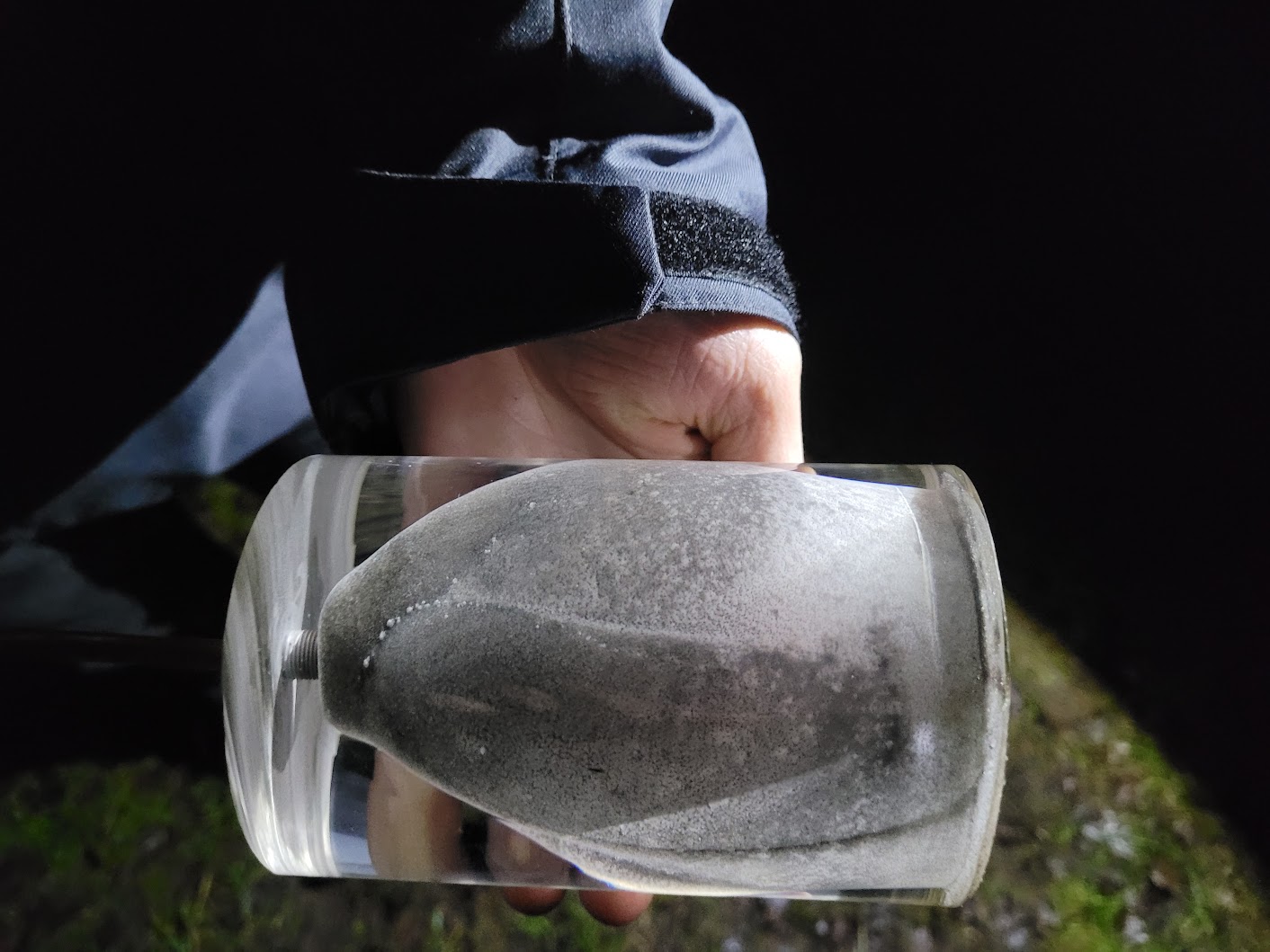
We observed with joy how the rod was being eaten from inside out after every firing. Below you can see three pictures showing the gradual progress of fuel erosion. What is worth emphasized is the internal shape that was produced during burn. The first interesting thing that we can notice is that significantly more erosion happened in the middle of the rod when compared to the sides. Next observation we can make is that the shape is asymmetrical across its centerline, and this line is not aligned with the centerline of the rod itself. It suggests several things:
- The biggest temperature inside the rod was somewhere near its center, as erosion of fuel is typically some constant raised to the temperature T.
- The oxygen flow was far from a nice laminar one and most likely created some vortexes inside.